
Anna Dumitriu explains her practice of BioArt: creating work from bacteria, cells and DNA to explore our relationship with the living world
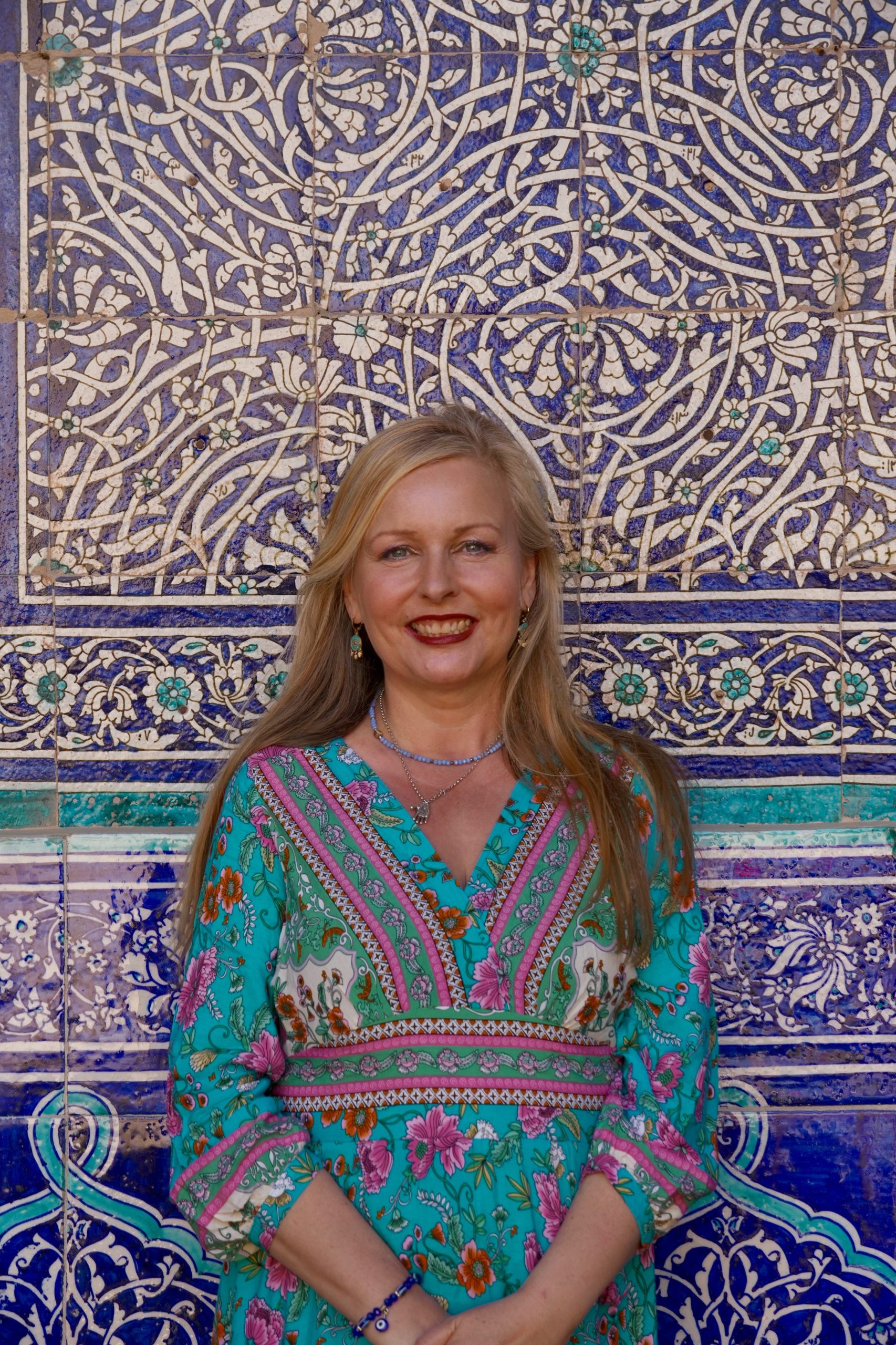
Anna Dumitriu in Khiva Uzbekistan (photo: Alex May)
Hi Anna, we’re delighted you are taking part in Artists Open Houses this year. You describe yourself as a bio-artist, working as much in the lab as the studio – could you give a brief description of what this means in relation to your practice?
Yes, firstly BioArt is an emerging artistic movement where artists work with biological media such as bacteria, cells or DNA, to explore our relationship to the living world and the practice of science and healthcare in society. It’s becoming increasingly popular as people realise the importance of the life sciences in future innovations. BioArt was described by the Art Newspaper as “the new avant-garde” as far back as 2016, and it’s still developing
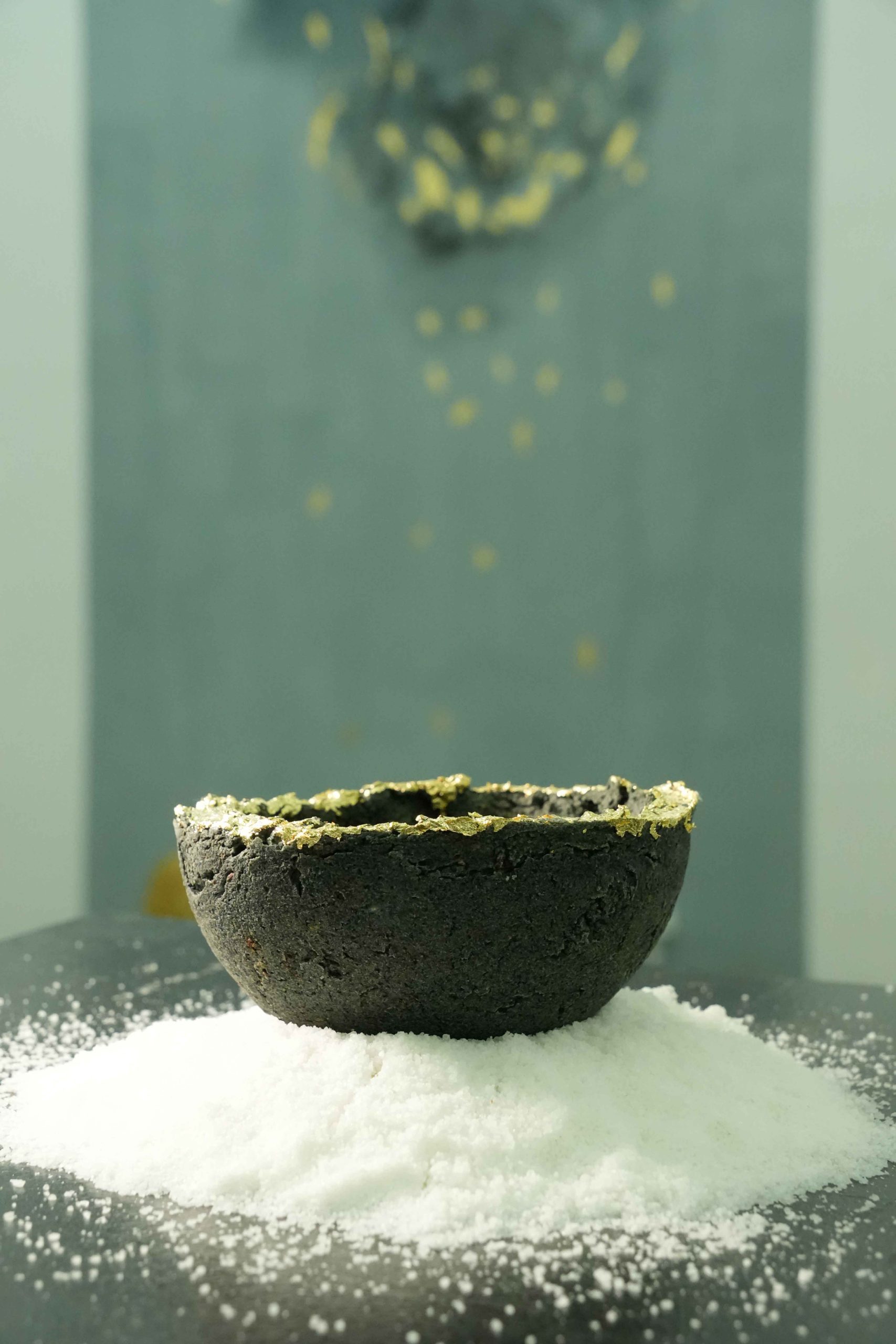 Healing Bowl
In my case, I originally trained in trained in Fine Art (at the University of Brighton actually), but I’ve been creating works as much in the lab as the studio for more than 20 years. Initially I persuaded a microbiologist to allow me to shadow them in the lab to study bacteria and it’s grown from there. I now have artist-in-residence roles with many scientific institutions including the Wellcome Sanger Institute in Cambridge, Modernising Medical Microbiology at the University of Oxford, the National Institute of Health Research – Leeds Biomedical Research Centre, Hertfordshire University and the Magan Centre for Applied Mycology at Cranfield University, and I have a long term collaboration with Brighton and Sussex Medical School.
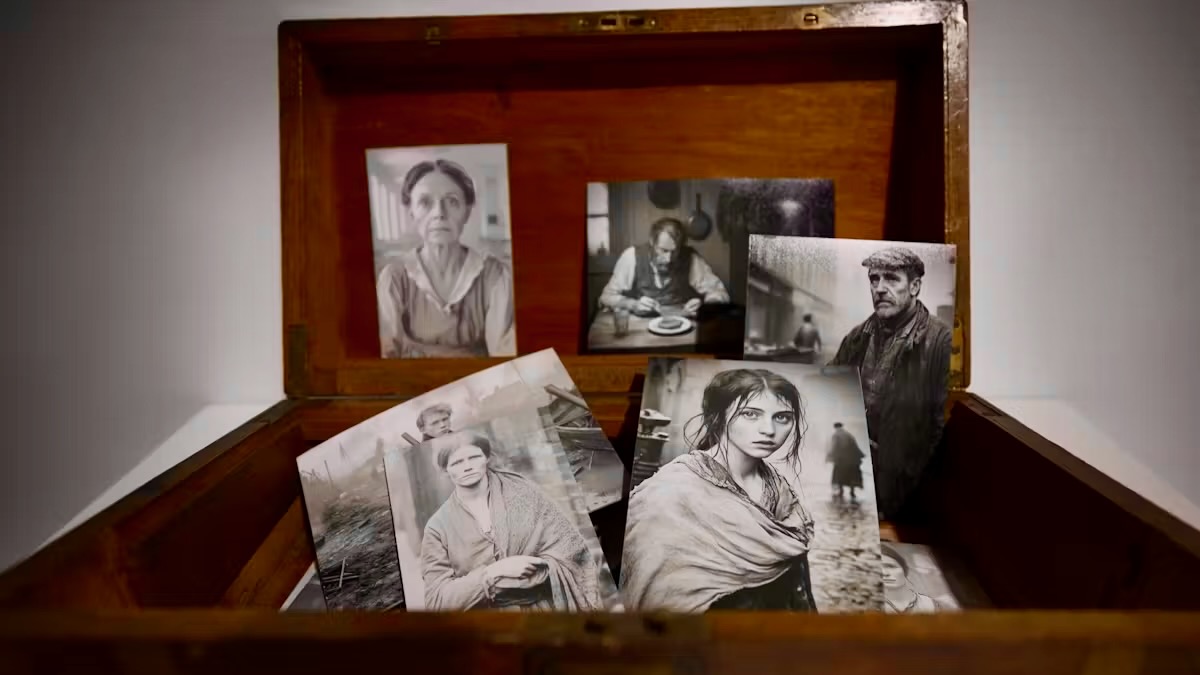
AI and Infection Prevention installation view at 16th Triennale Kleinplastik – Anna Dumitriu and Alex May
I work hands-on with the tools and techniques of microbiology and synthetic biology and I have created work pathogenic bacteria including Yersinia pestis which causes the Plague and Treponema pallidum pallidum that causes syphilis, to create intricate artworks, sculptures, textiles or installations that explore the history and emerging futures of these strange and important diseases, from their emergence to cutting edge genomics research. I am fascinated in how contagion is intertwined with culture and society, how diseases like TB and syphilis have influenced fashion, literature and even architecture. I have also worked with gene editing and CRISPR DNA modification in past works, and the CRISPR Journal said I was the first artist to work with this cutting-edge technique.
Your work aims to engage with audiences at both an aesthetic and intellectual level – would you like to tell us a little about this?
I am fascinated in the whole gamut of aesthetic sensation, a kind of beautiful terror if you like. I think art has the power to communicate ideas and new research but simultaneously it can communicate in a non-verbal way through our emotions and reach people in personal ways that go far beyond the experience of reading a scientific paper for example. Storytelling is important to me. The Plague Dress is stuffed full of and surrounded by lavender.
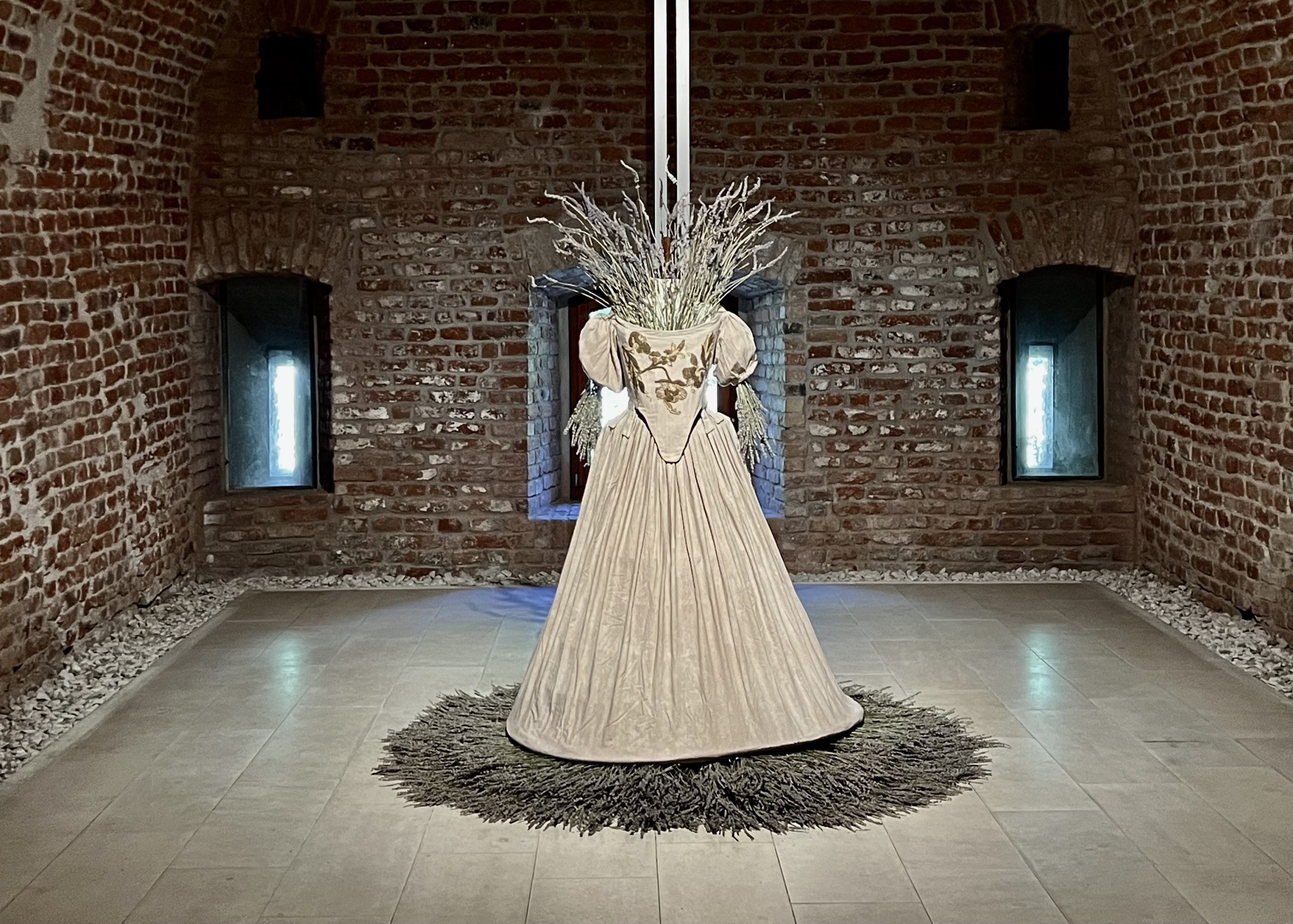 Plague Dress
Your work also explores areas such as AI and environmental challenges – are there ways in which these subjects intersect in your work?
Yes, absolutely. Actually, I was artist in residence in the Centre for Computational Neuroscience and Robotics at Sussex University between 2004 and 2010, which was the biggest artificial life research group in the world at the time and now I have a research fellowship at the University of Hertfordshire in Computer Science so I do have a background in working with AI. Currently I am working with Dr James Price at Brighton and Sussex Medical School to explore how AI can be used to predict infections and outbreaks before they even happen. It brings these interests together for me. If you want to know more about how that works come and see the show.
I’ve also created an underwater robot with a neural network that explores what a post climate change world might look like. This is currently on show at Diriyah Art Futures in Riyadh. Other projects of mine such as Greening the Lab and Chandelier explore how to reuse waste from healthcare and agriculture to make biomaterials. I’ll be showing Chandelier in the show in Brighton
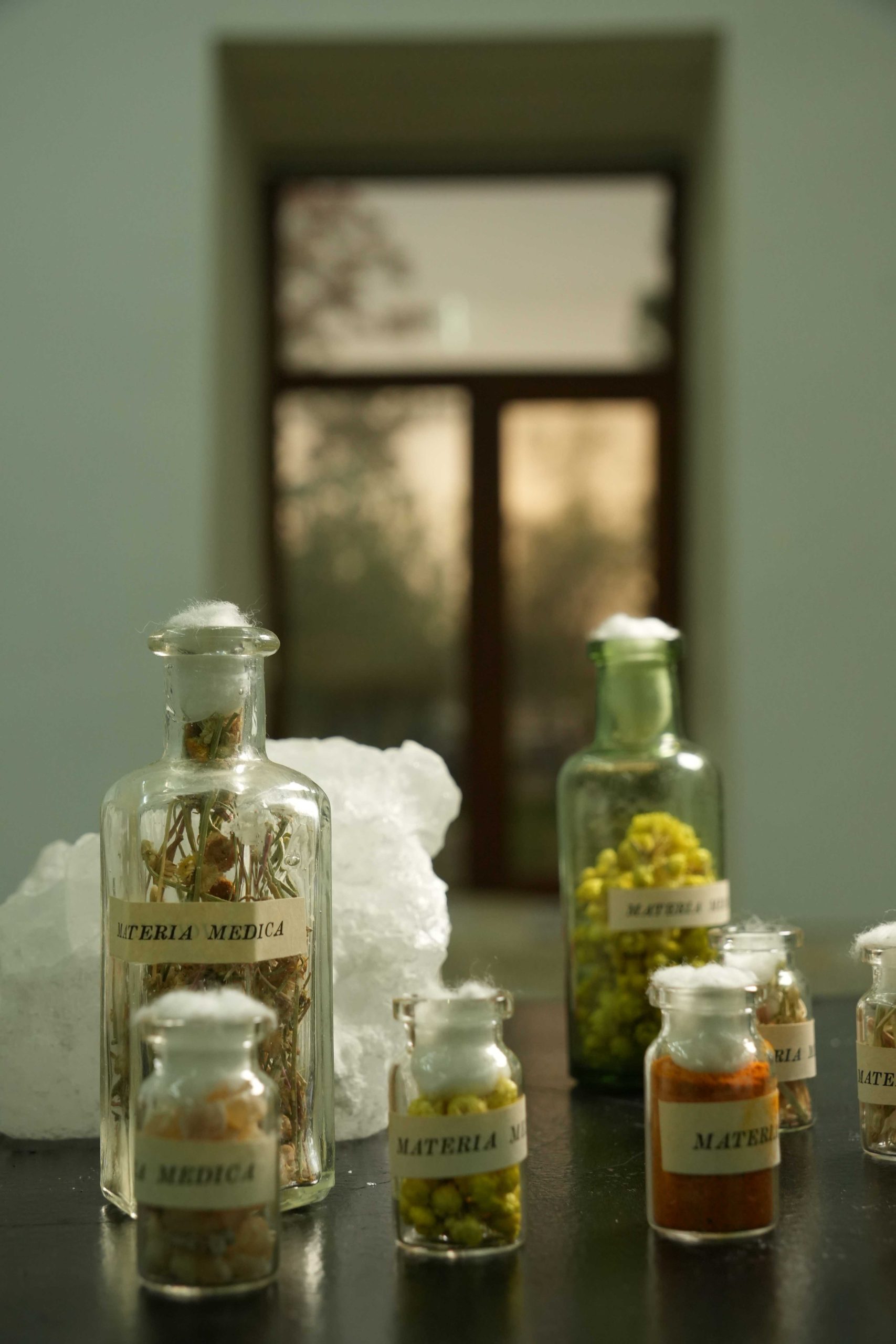 Materia Medica
You have just held a new solo exhibition in Uzbekistan ‘Materia Medica: Unravelling the Silk Road’. Can you tell us about the inspiration for this theme and how your work interprets it?
Yes, it’s still on until the Summer actually, at the Uzbekistan Museum of Contemporary Art (CAMUZ) in Urgench. My project, which was funded by the British Council’s Connections Through Culture Programme explores rich medical history and current healthcare and environmental challenges and innovations in both Uzbekistan and the UK, bridging historical narratives around figures like Avicenna (who completed a significant medical encyclopaedia “The Canon of Medicine” in the year 1025 and was born in what is now Uzbekistan) and contemporary issues such as the ongoing stigma of tuberculosis, soil health, and the environment. Artworks in the exhibition incorporate a range of media including 3D printed forms, natural dyes, anatomical wax, recycled medical waste, salt and plants.
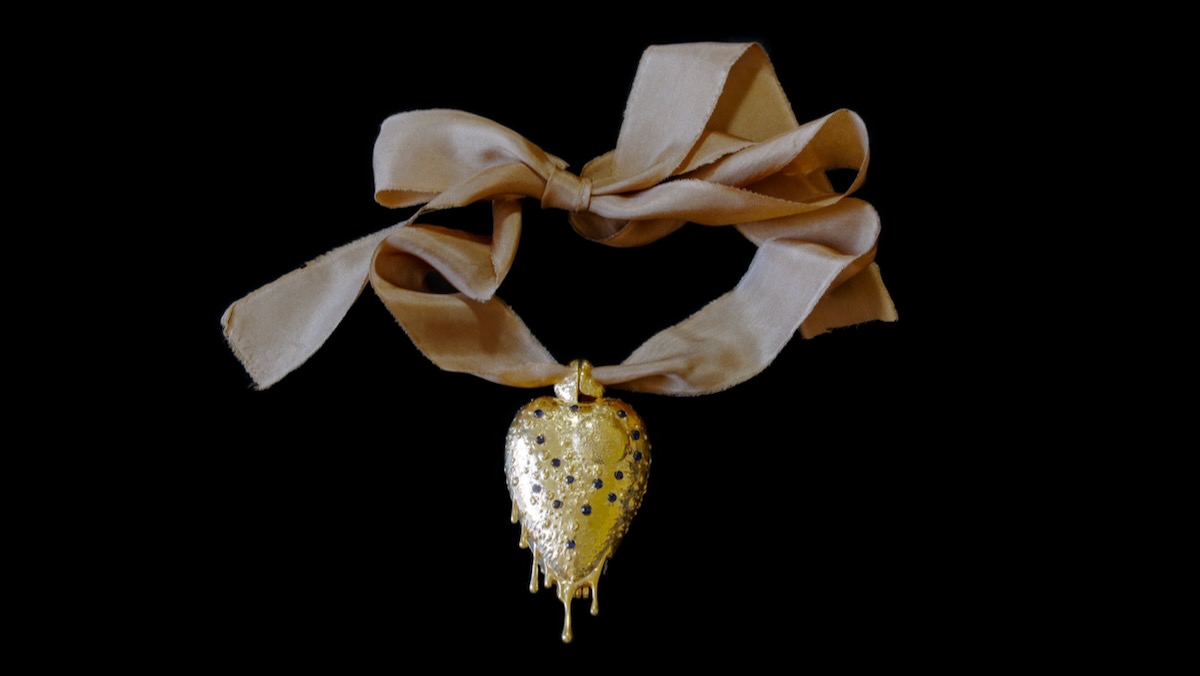
Zenextron
I created a new body of artworks working with locally sourced materials such as silk, and natural dyes, as well as sculptural materials and biomedia. The new artworks were informed by local perspectives, materials, and histories. In Uzbekistan I met and worked with the young ecologists, members of the Aral School, microbiology professors, art students, professional artists, and medical students. I bought many of my materials locally, often in Urgench market across the street from CAMUZ.
Will your Open House exhibition have connections with this show?
Yes, I am making second versions of two works for the show in Brighton. The “Materia Medical Necklace” which is inspired by Avicenna’s writings in his “Materia Medica” (book 2) where he describes treating a range of illnesses using madder root, pearls and roasted silk, and the “Healing Bowl” which is made from my own biomaterial recipe with compost from bio-digested hospital aprons from Europe, and indigo which has been researched in Uzbekistan as a means of reducing the salinity of the soil there, and has shown benefits.
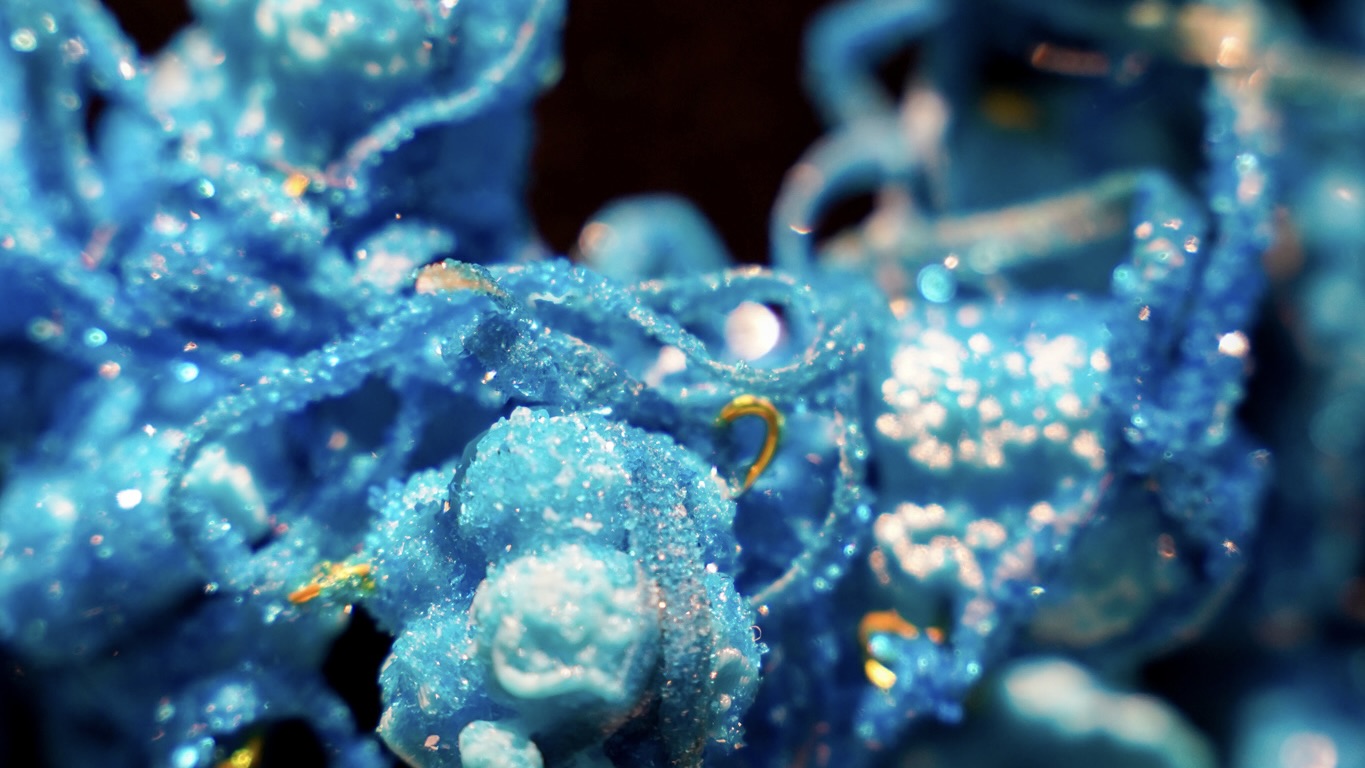
Cellular Reprogramming Necklace (photo: Audrey Rose Mizzi)
You will also be hosting a programme of events during AOH – what can audiences except from this?
I’m doing at least one talk event with one of my scientific collaborators Dr Jane Freeman who is a microbiologist at the University of Leeds and this event is listed on the Artists Open Houses website, and I am also leading free drop-in guided tours (sometimes with my scientific collaborators) at 12 noon and 3pm on the 9th and 10th and 16th and 17th May 2026 (weekends).
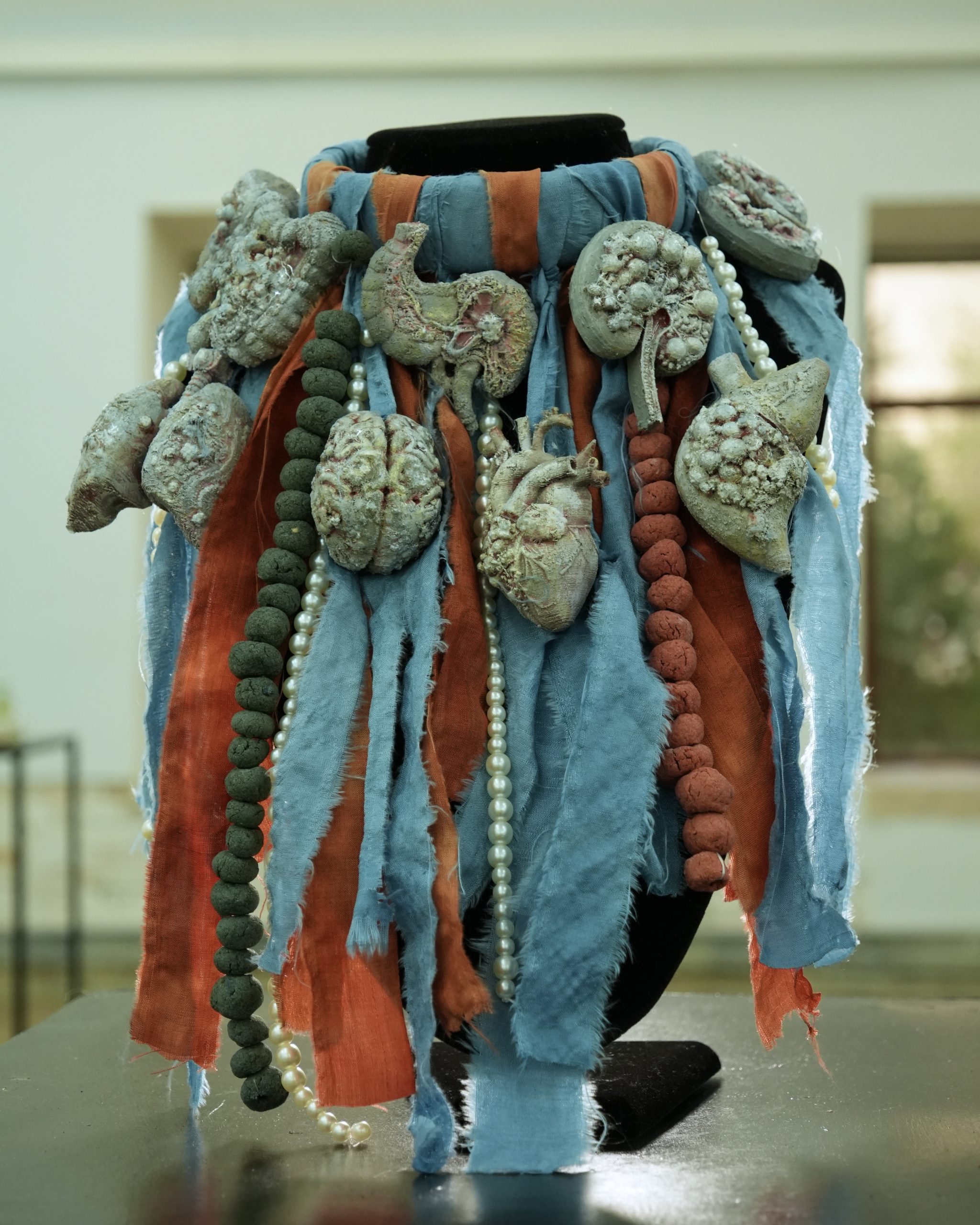 Materia Medica Necklace
What are you most looking forward to in holding an Open House?
It will be great to show my work in my home city. People might have seen my Black Rock Beachcombers (in collaboration with Alex May) along East Brighton beach boardwalk, but now they can see a selection of gallery-based works, including The Plague Dress (impregnated with the extracted DNA of the Plague, the Zenexton (an amulet to ward off the Plague – that really works), and the Mutability of Memories and Fates where I and my collaborators explored immortality by creating cells that have lived four different lives as heart cells, neurons, liver cells and lung cells reverting back to stem cells at each step. This project will also be on show in Munich later in the year.
Visit: BioArt Transformations
Regency Town House Basement Annexe, 10 Brunswick Square, Hove, BN3 1EG
No. 4 on the Brunswick Town Trail