
AOH artist Sarah Shaw talks about painting: from quiet introspection to her work being a backdrop at Glastonbury!
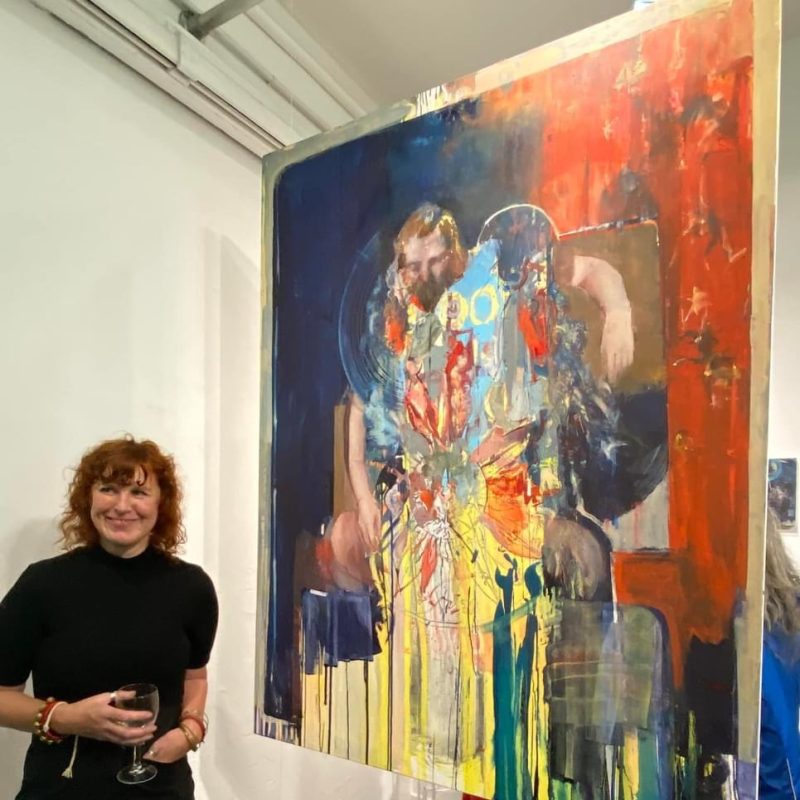
Hi Sarah – This is your third year of taking part in AOH. How are preparations going for your Open House/studio?
It’s always hectic this time of year with a few gremlins in my machine literally, physically, and emotionally but I’m getting there! These last two weeks are going to be a bit crazy as I have, oh so wisely, decided to up ship and move studio just prior to opening my doors for the first weekend! Luckily the new move is literally next door – the address remains the same, only the number of the door has changed so I don’t even have to change the address in the listings. The plan is to keep my present studio as a place to work during the festival whilst the new studio will be more of a clean gallery like space. It’s going to be a bit of a challenge but I’m totally up for it!
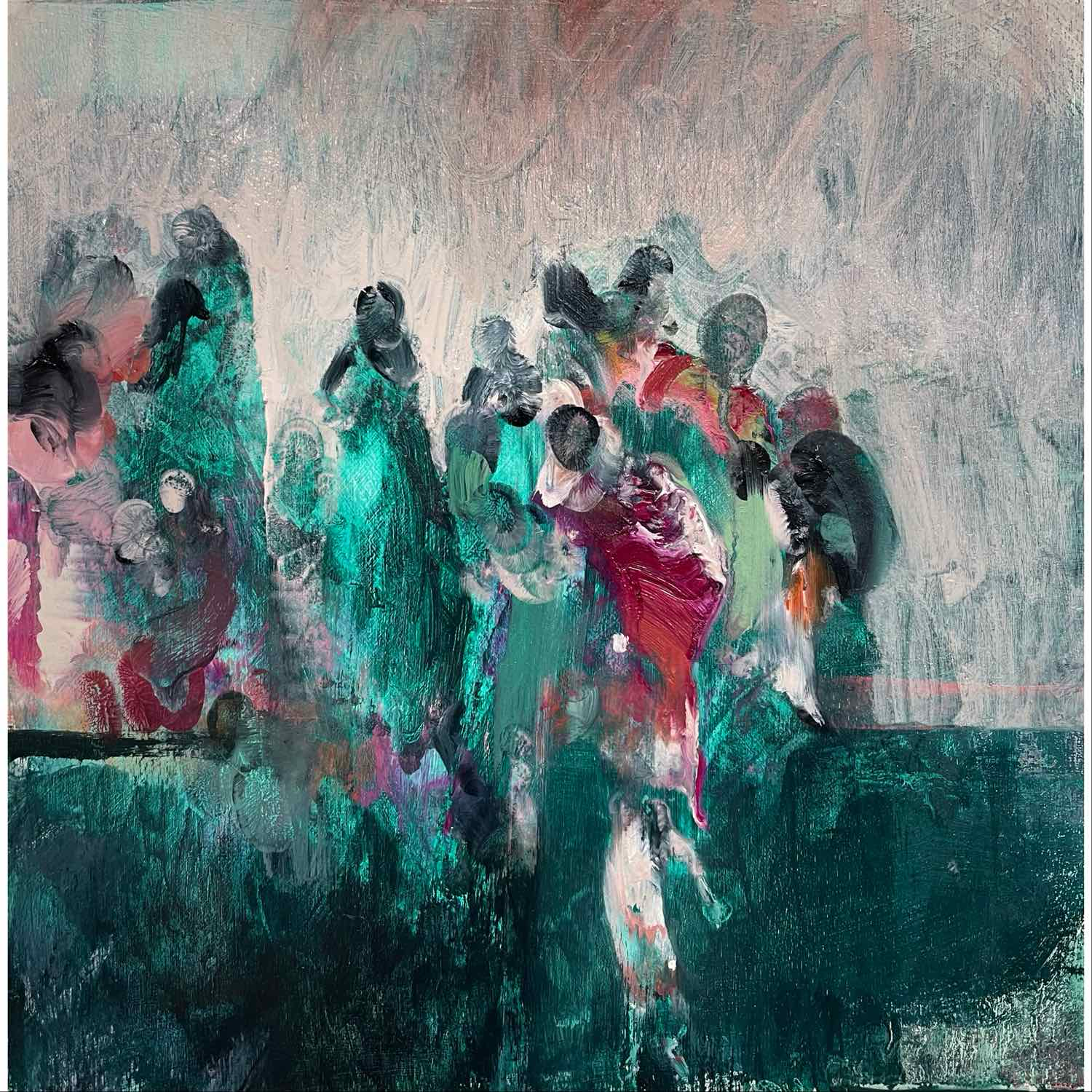 Pthalo – oil on wood
Can you tell us a bit about your practice, the main themes and influences on your work?
I think as I’ve got older that I’ve really begun to lean into who I am as a painter. I’ve done lots of reflection over the last few years and have realised that my natural predilection for image making lies in the excavation of imagery rather than a pre – prescribed path to a painting. I have to be surprised by what happens in a painting and if I’m not exhilarated and fascinated by the process then I just don’t feel that the painting is worth keeping. You’d be amazed how many times I work all day on a piece then swipe it all away, and then, somehow, find the painting that seemingly was there all along. I just have to switch off myself for a bit and be brave enough to challenge the easy path.
My practice is basically creating something akin to order out of chaos. Always has been. I don’t feel that it matters where I begin. I sometimes just have a mad session of just throwing paint at a canvas, working into it with whatever I have to hand, or loosely transcribing an image in paint then just seeing where I’m lead through process. I’m never satisfied with a painting that is arrived at easily. I enjoy the dialogue between me and the canvas. At best it’s like a dance; an Argentine Tango with a feisty partner, speedy and fiery; intuitive and exciting, at worst it’s an ever-spinning Waltz but perhaps more like the Sufi Waltz; a physically active meditation.
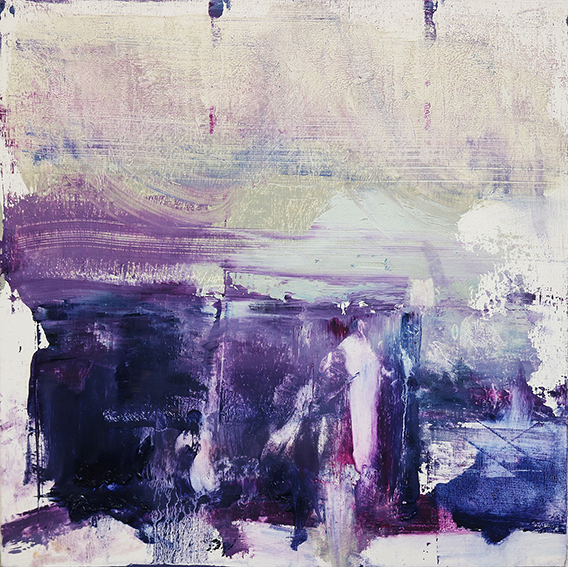
Spell
Thematically, difficult to say; as I said initially, I’ve begun to accept whatever happens through process to be the painting. Once that feeling of incomplete completeness has been reached and there is a kind of murmur to the painting, I leave well alone. The work exists in a liminal flickering place between figuration and abstraction and narrative is always there in the wings waiting to take the stage. I see myself as an excavator. I often talk to the figures I ‘excavate’ – that sounds a bit weird but it’s true. I want to know what they have to tell me.
My process is painterly and intuitive though I cannot help but be affected by events in the world and it’s not surprising to me that the paintings often reflect the huddling masses we see in the news; refugees perpetually hovering between the here and the not here. My Smoke Room series, a series of twenty-three oils on slate were after all made against a backdrop of ongoing crises at home and atrocities in Ukraine.
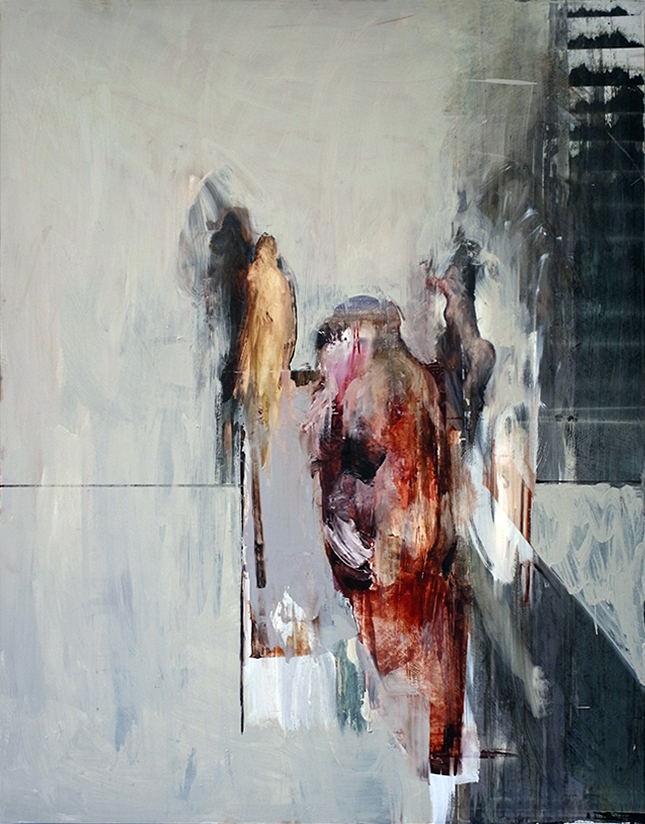
The Company of Lovers
How does technology play a part in the way you work? Do you feel painting still has relevance?
Interesting question! Technology plays a subtle but significant role in my work. Not in the literal tools I use which remain traditional (mostly oil on various surfaces) but in the aesthetic and conceptual influence of digital culture. My paintings often incorporate visual motifs from the digital age such as glitches and buffering symbols which hint at the interruption or distortion of memory and perception which are ideas central to my work. Digital visual fragmentation is mimicked in painterly layering and erasure, suggesting a kinship to the way we now consume images and information. This digital influence aligns with broader themes of ephemerality and emotional memory – I like the idea that you are looking at a half-loaded image, a broken transmission or a memory corrupted by time.
In terms of the second part of your question, I feel that painting is more relevant than ever. Painting embodies time and touch in a way that digital media cannot and will never; there’s still something irreplaceable about the presence of a painted canvas. In an era dominated by screens, algorithms and infinite doom scrolling, painting remains stubbornly human and physical. Painting slows us down. It invites a kind of looking that’s increasingly rare – quiet and sustained and necessary. In a world where so much is virtual and transient, painting reminds us that being present still matters – and maybe now more than ever.
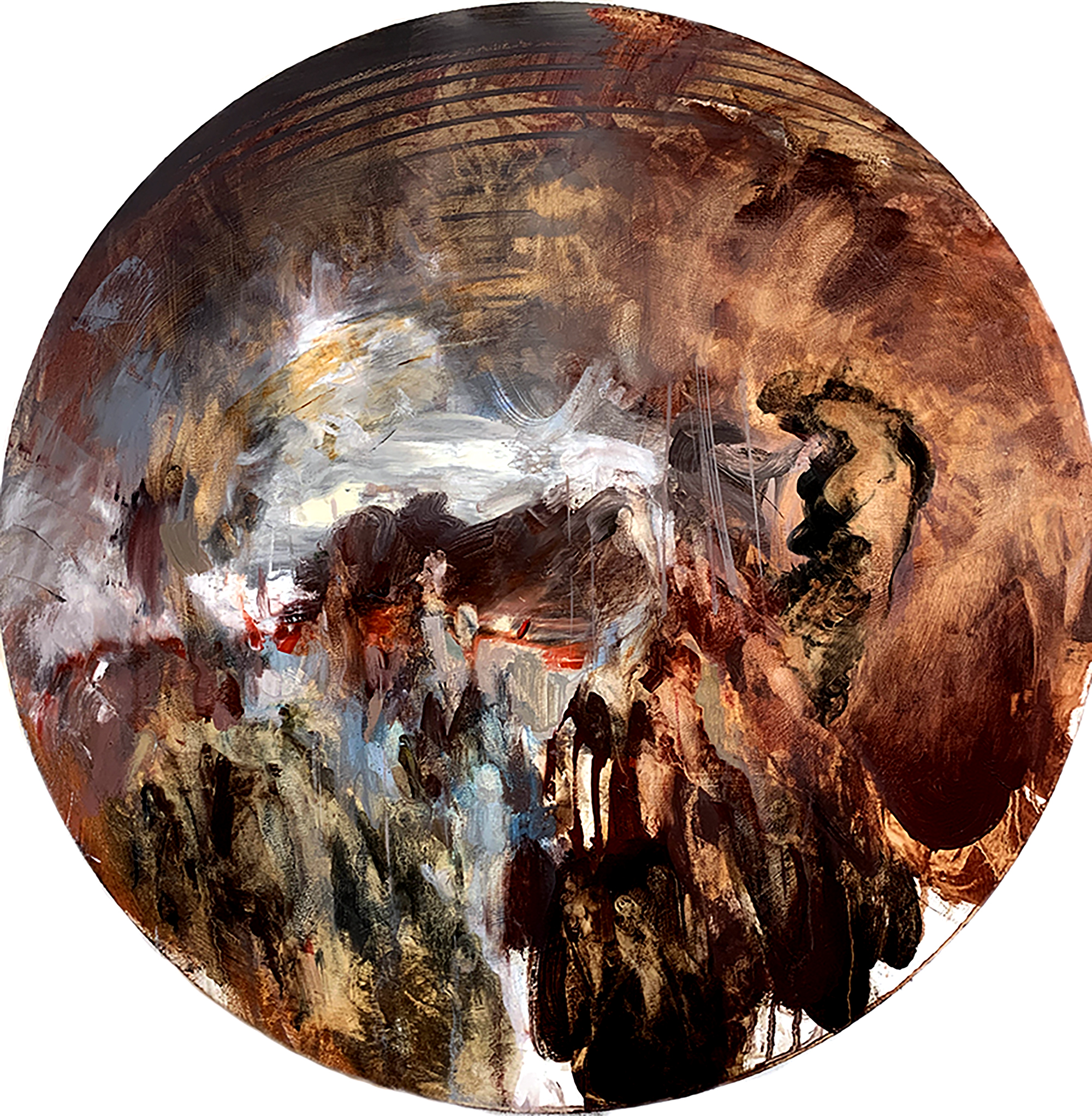
The Sleep of Reason
Would you like to tell us about how cinematography specifically influences your work?
There’s something in the language of film that has always spoken to me—not the slick narrative arcs or special effects, but the slowness, the silence, the held breath of a frame just before it shifts. A Lynchian way of holding an image still long enough for it to start saying something back. Cinematography influences my work in ways I can’t always name directly, but I feel it in how I build tension through composition, how I use light to illuminate but also to obscure, to withhold. Like a director choosing a lens or an angle, I crop, layer, erase—inviting the viewer into a scene without explaining what they’ve walked into. The titles of my paintings often reference this idea.
I’ve been drawn recently to the use of red in Mark Jenkin’s films: that sudden intrusion of colour into a mostly muted world. Red as signal, wound, warning, desire. It’s not decorative, it’s psychological. That kind of charged colour moment echoes in my own work. I’ll often use a specific colour not to balance a composition, but to disrupt it, to activate something beneath the surface. Film has taught me how to think about the emotional charge of space, about what happens just outside the frame, and about how much can be said in a pause, a shadow, a barely-there gesture. I’m not trying to recreate cinema on canvas, but I am trying to paint with its sense of time, its rhythm, its restraint.
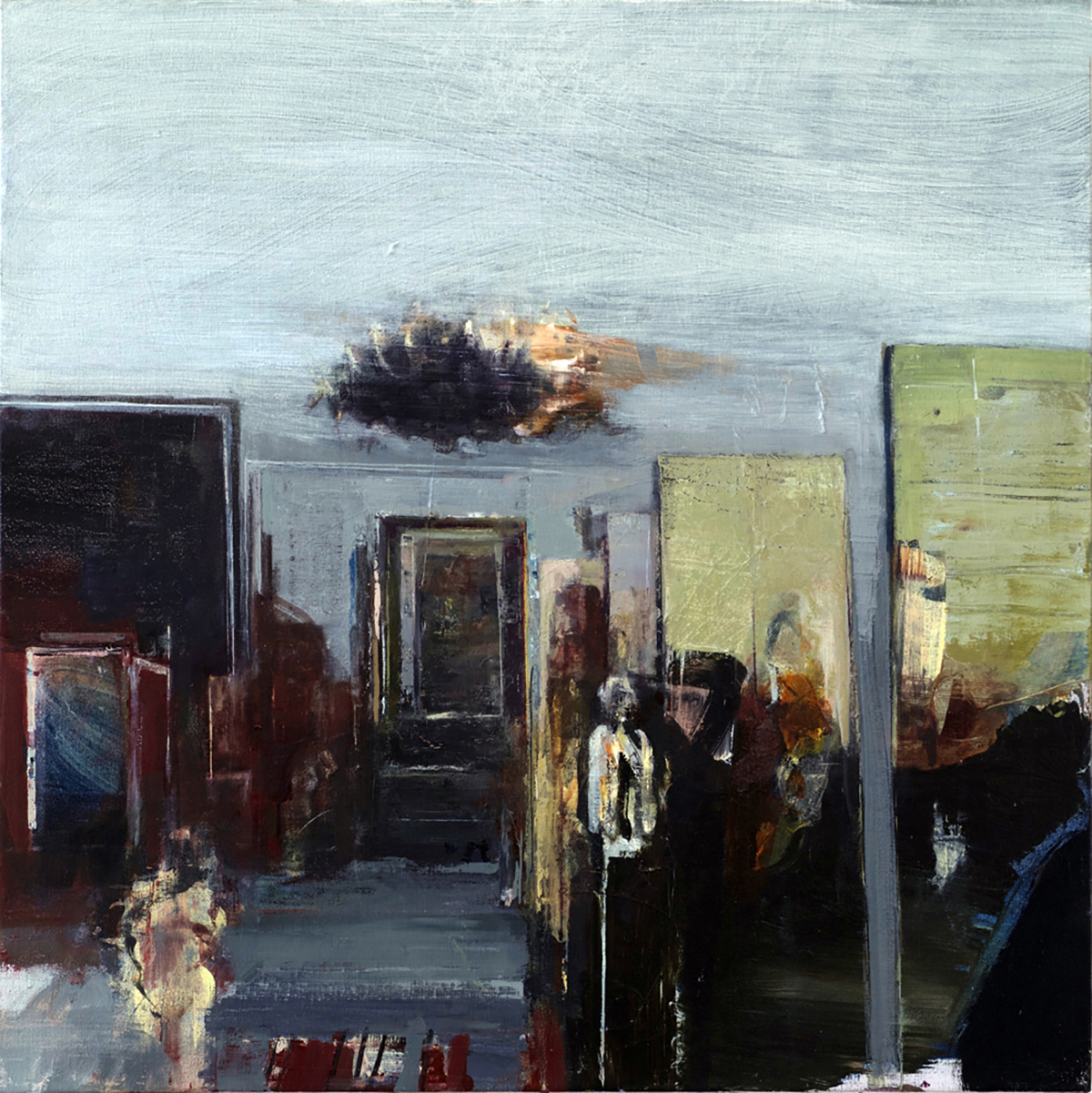 Hall of Mirrors
You have quite a few collectors in the music industry and have provided artwork for several record labels can you tell us about this connection?
Yeah – still pinching myself about that! My first one was none other than Ronnie Wood! When I was told I had sold my painting Rorschach head to him through the National Open Competition, my mum said that I would have to get all the doorways in our flat widened to be able to get my big head through. Ha! I tweeted him once (that was how long ago it was) and asked him for a picture of the painting in its rock n roll home but never got a response.
I don’t really have heroes: don’t believe in the concept, but if I had a musical one it would be Thom Yorke. If I was ever gonna get a big head, it would be when he got in touch and bought work from me! I couldn’t fathom that he could even be aware of my existence but when he contacted me, he said he followed me secretly on Instagram. I was flabbergasted. He bought three paintings and I got to meet him last year too. A lot of my paintings were made listening to Radiohead or Thom’s other projects so it just blew my mind that he would be living with my work. Still does!
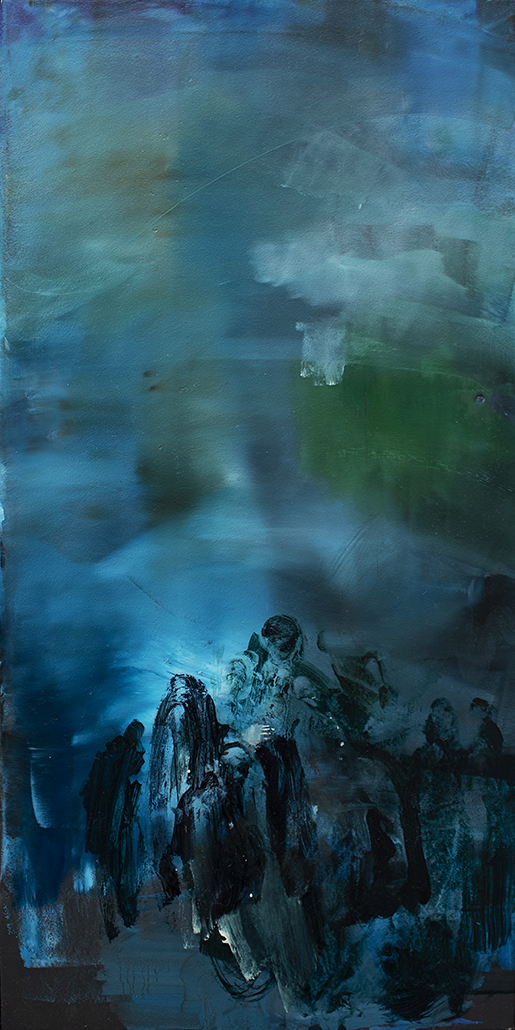
Smoke Room XX1
One of the most significant connections I’ve had with the music world came when my painting The World is Spinning Around was used as the album cover for Daughter’s 2015 album Not to Disappear. It was an organic and unexpected collaboration; Daughter’s team approached me after seeing the work, and it felt like a natural fit. There was a strong emotional resonance between their music and the themes in that painting: memory, loss, emotional fragmentation.
Since then, the image has taken on a life of its own. It’s been seen by audiences far beyond the art world, and I still hear from people who discovered my work through the album. That crossover—the way painting and music can meet and amplify each other has been incredibly meaningful. It reminded me how powerful it is when artwork finds a second voice through a different medium.
What completely blew my mind was seeing the painting used as a backdrop during Daughter’s live performances, including their world tour and even Glastonbury. To see something that began as a quiet, introspective work in the studio scaled up on that kind of stage, surrounded by sound, light, and thousands of people was surreal and incredibly moving. I was also lucky enough to meet the band backstage when they played Brighton Dome, and to have that exchange in person made the whole experience feel even more full circle.
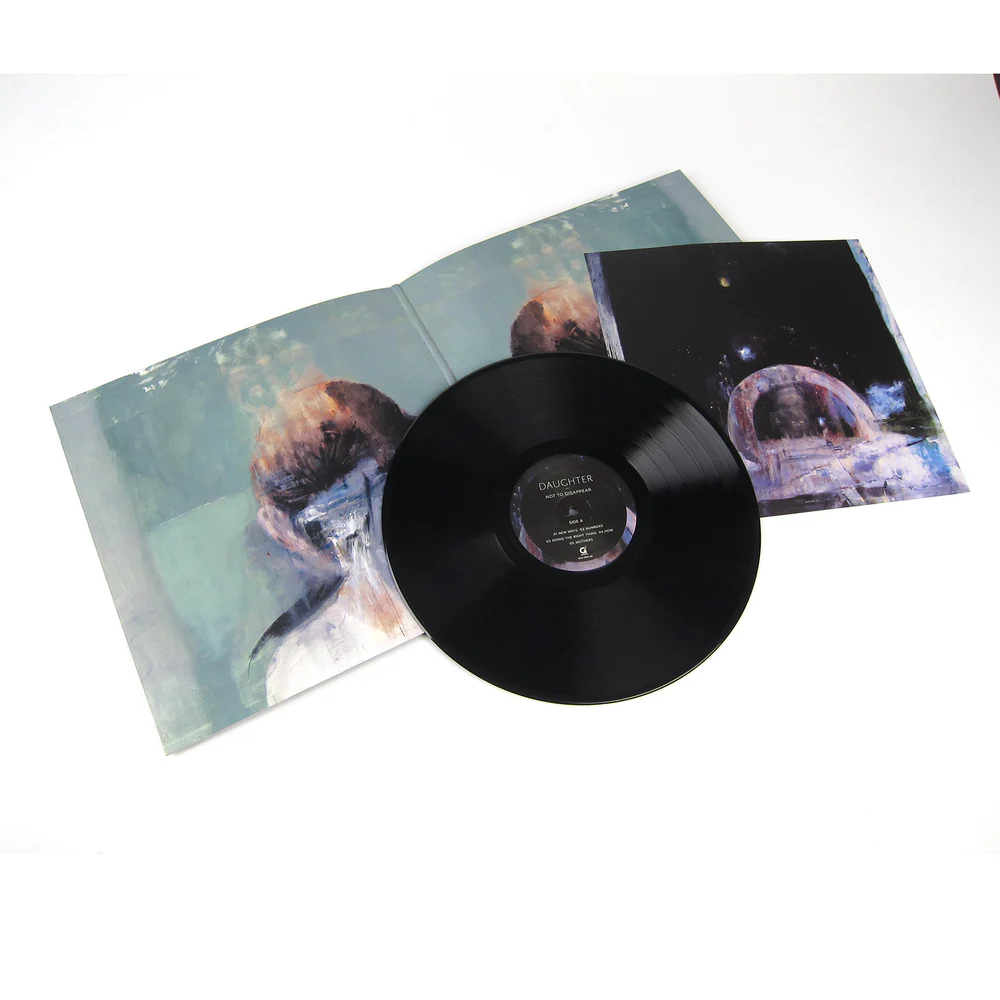
Daughter -Not to Disappear
Now, for the ten-year anniversary of Daughter’s Not to Disappear it feels like the right time to return to that moment. In 2025, I’ll be showing a new body of work that reimagines the album cover painting The World is Spinning Around a painting closely linked to that same emotional terrain. The exhibition will reflect on that original image and the way it’s echoed across time, experience, and memory. It’s not about repetition; it’s about tracing what still resonates, and what’s changed.
Alongside Daughter, I’ve had my work used as album covers by small indie bands like Southampton’s Burning House, where the fit felt just as instinctive. I’ve always been drawn to musicians who are reaching for something raw and atmospheric, and when the right alignment happens, it’s as if the image and the music are speaking the same language without knowing it
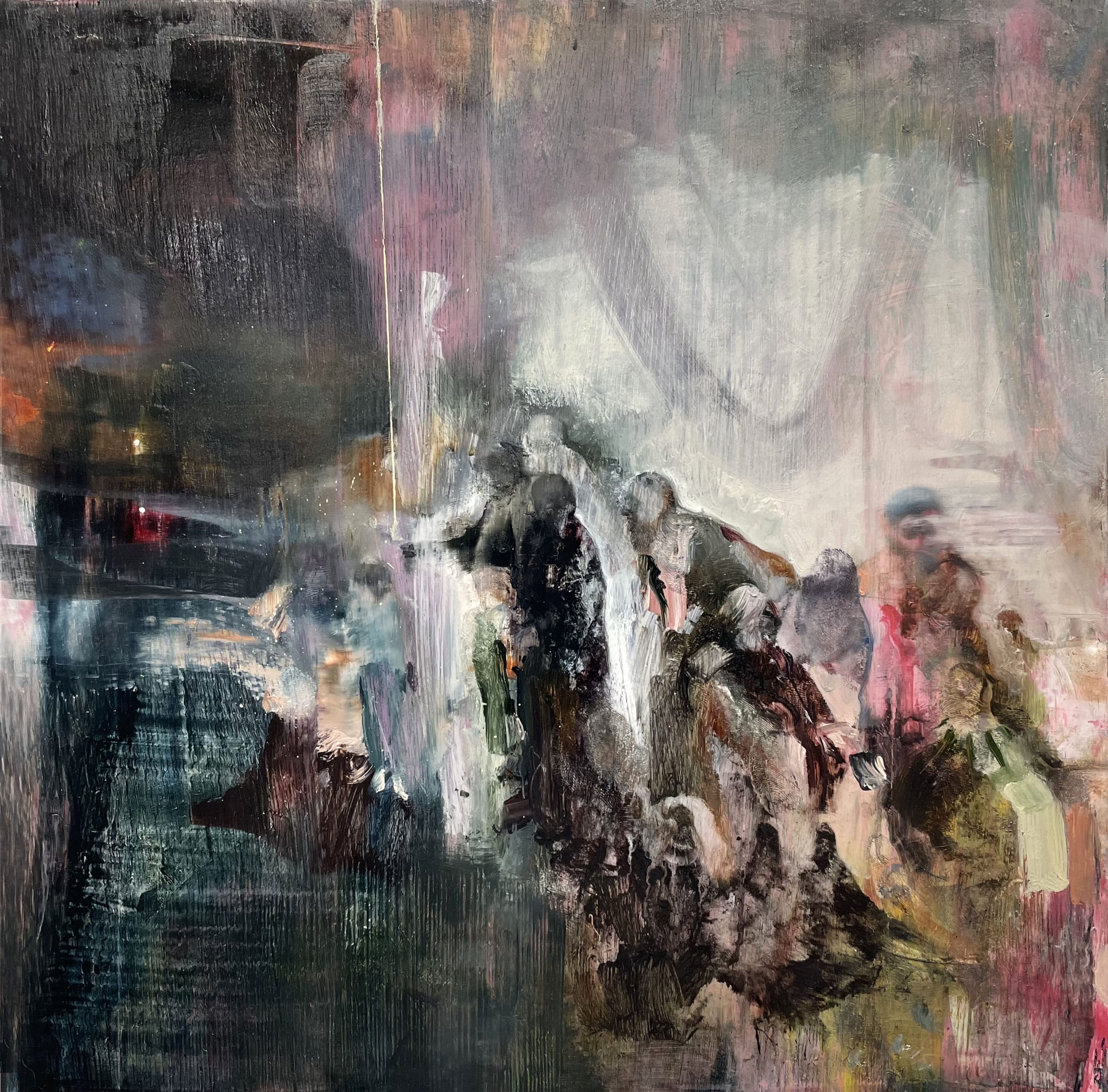 Veil
Veil
What are you most looking forward to about taking part in the Open Houses this May?
Well, if all goes to plan, I think it’s going to be an exciting Open House – two venues next to each other. One clean gallery like space, one not so much! Both open consecutively. I’ve got friends and family coming to help me man the decks so I can get on with my work, but I think it’s quite exciting to think that you choose to see me in my working studio or go be in the gallery like space – preferably both! I’m really looking forward to May – it’s going to be hectic but exciting and the new space has beautiful light!
Is there anything else you’d like to tell us?
Just to say, thank you for including me in the blog, thank you for the interesting questions and I look forward to seeing you at my Open House.
Visit Sarah Shaw’s Open House at:
Sarah Shaw Fine Art Painting
3a Bond Street Cottages, Brighton, BN1 1RP
On the Central Trail
@sarahshawpainting
www.sarahshaw.co.uk