
New to AOH, artist Mackenzie Scott Clowes on the urban as metaphor, a sense of carnival and the promise of a story unresolved
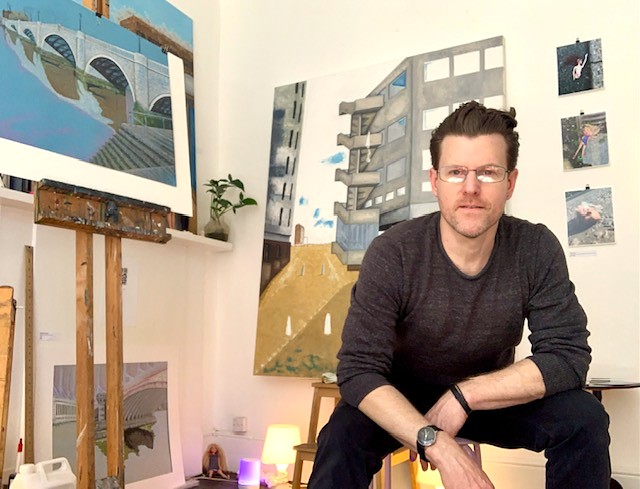
Welcome to the Artists Open Houses – you are new to the festival; would you like to tell us how long you have lived in Brighton?
I moved to Brighton in 2022 but really didn’t ‘live here’ till the start of 2023. My partner and I were trying to find our feet and renovate our first, tiny flat, which when we bought it was uninhabitable with damp and rot. I didn’t manage to find a studio until later in 2024.
Where did you previously live and exhibit your work?
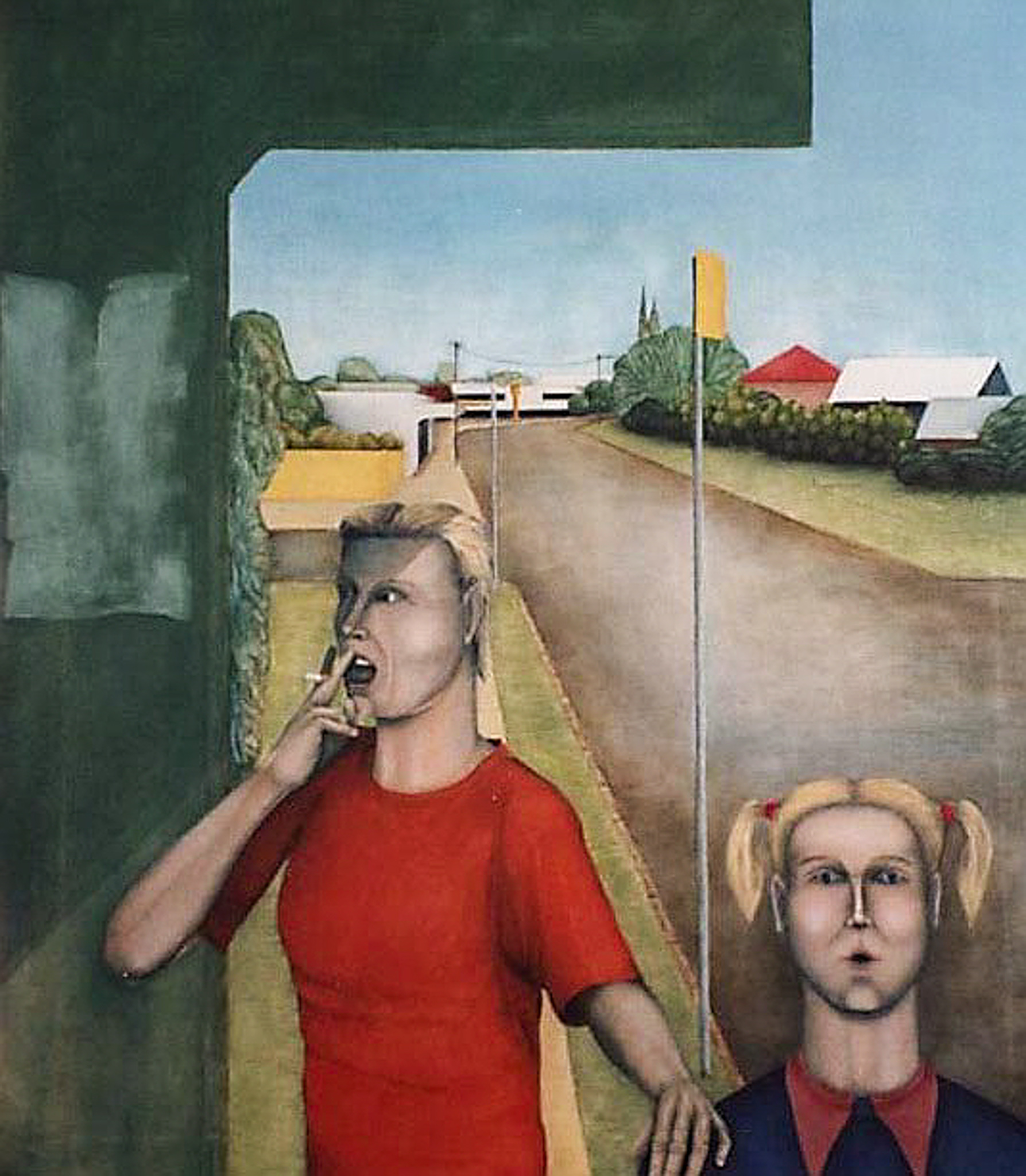
I lived in London and Bristol. I am also Australian so there is a long story there too. However, I had a studio in Hackney Wick for over 15 years (the same one). I had a real sense of place and grounding in East London. I have exhibited in group shows across East London and held a self organised, solo show in an amazing (now gone) project space above my former studio. Otherwise I utilize online resources like Saatchi Art to build profile and sell work. It can be challenging in many ways as the nature of how artists connect with audiences has changed. These sites can also be saturated. That said, online profiles can bring liberation and a potential dismantling of old art world power structures. I just don’t love the tendency for artists to have to ‘show’ something even if work isn’t ready or they are firmly in the middle of a line of enquiry. Making paintings can take a long time and finding the resources to keep going is a puzzle.
In your work you are interested in exploring what is familiar and what is hidden – in particular urban dystopias – would you like to explain these ideas a little more?
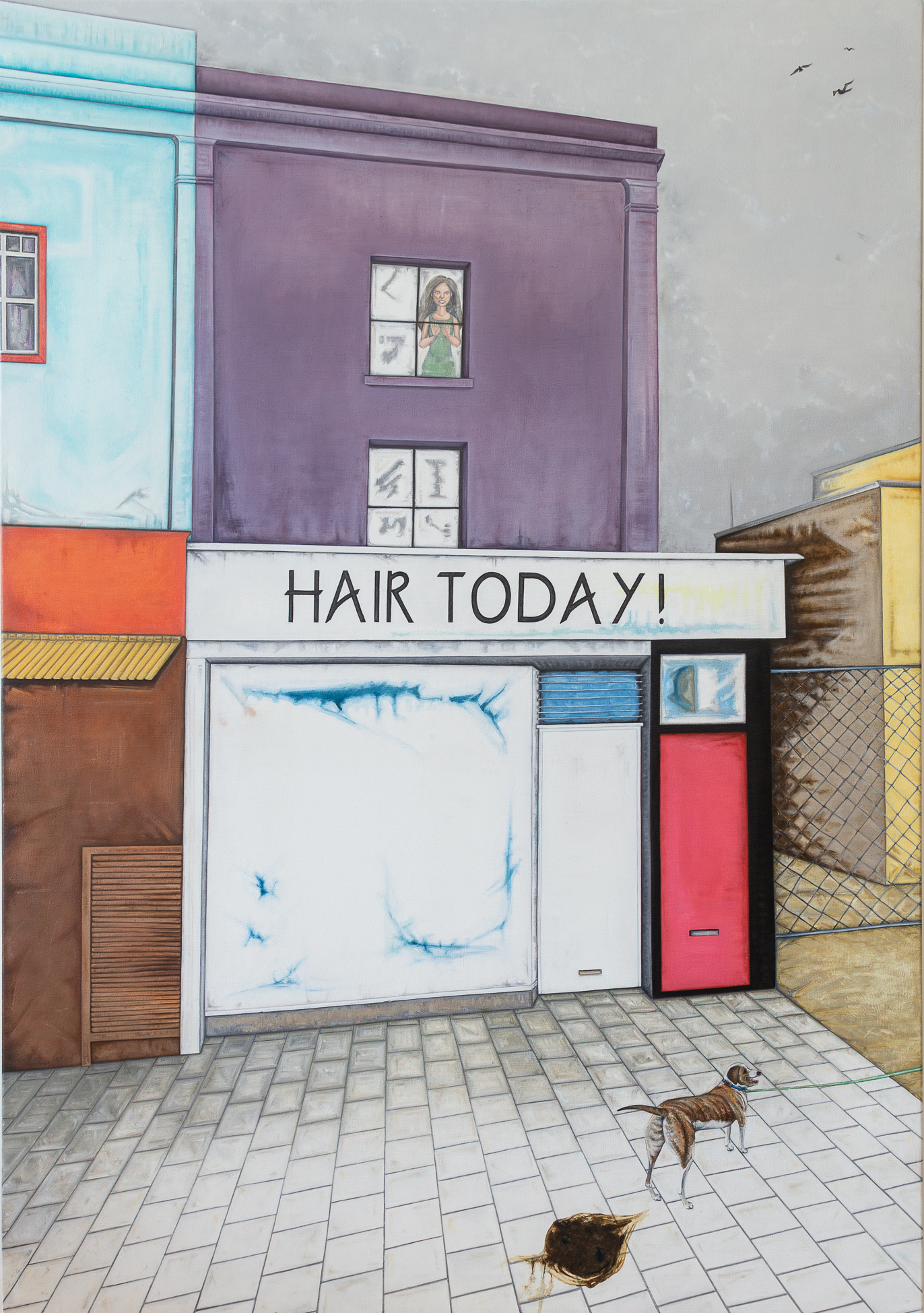
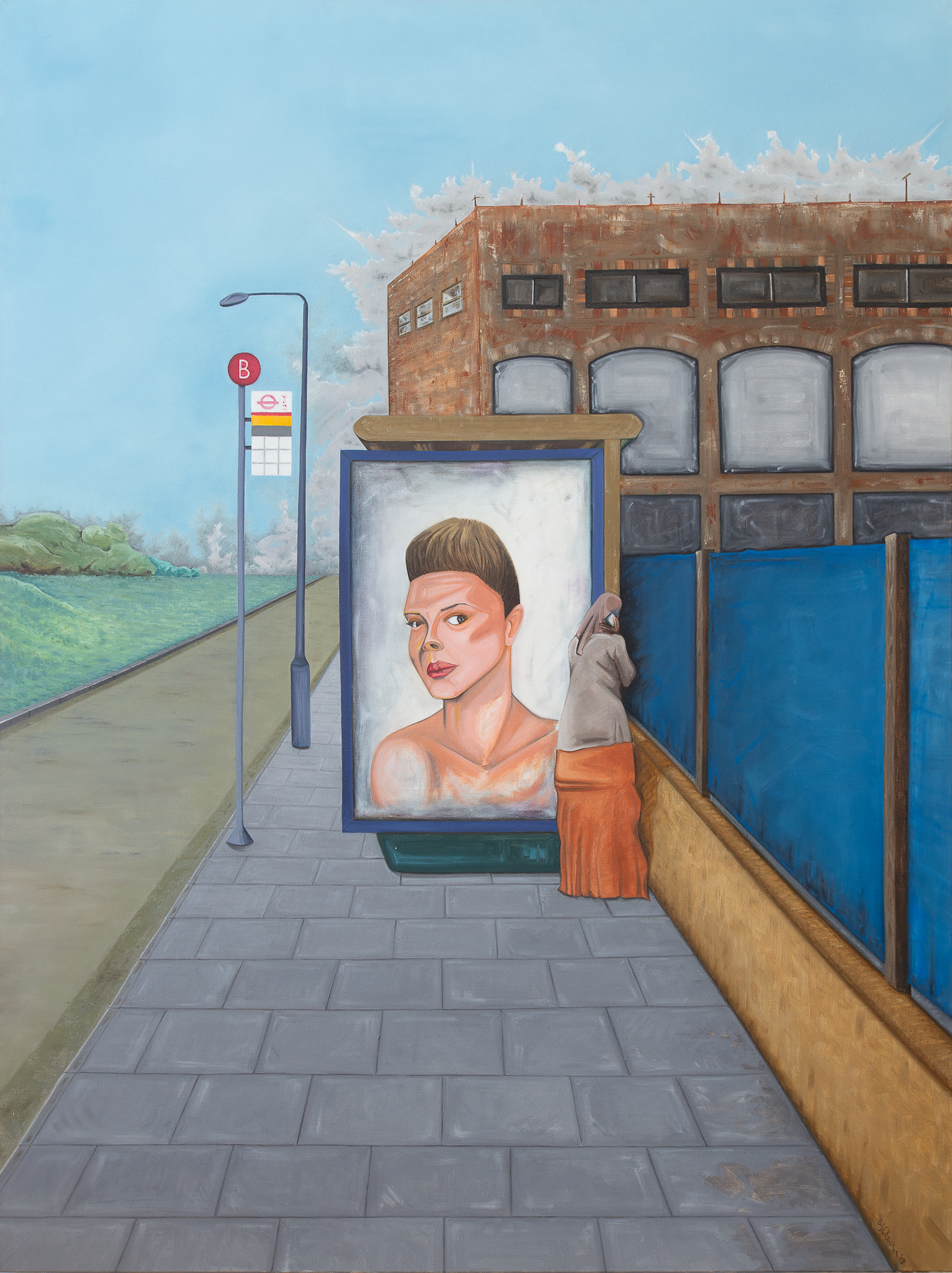
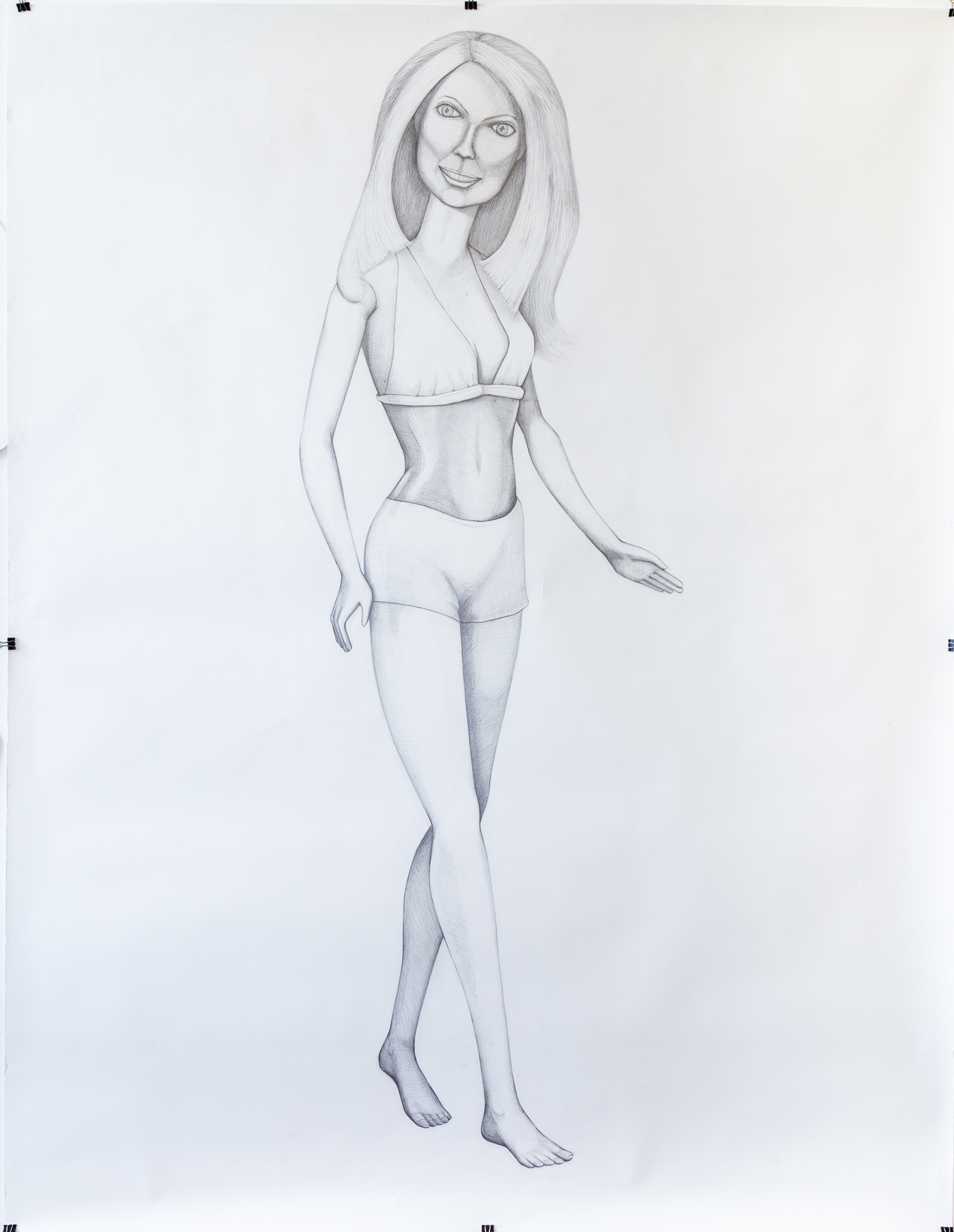
I am a queer, working class artist who grew up in an unforgiving landscape. Much was hidden for me for a long time and the culture of the suburban was invariably to create a veneer of colour and positivity which felt disingenuous and prison-like. This was manifest in the aesthetics of the buildings around me. Yet it seemed the alternative had no place within the homogenous. That might sound melodramatic but it certainly informed my earlier, Australian work at length. As my work shifted and took more inspiration from the urban in the UK (and my own narrative became less of a focus) the isolated, almost plastic figures in my work pivoted more towards actual dolls. The buildings in my current work are more and more like facades and designed to seem dream like yet familiar; despite not always accurately representing ‘reality’. So whilst the urban can offer excitement and cultural riches, I would argue this is something more and more accessible only to the privileged. In turn, the facade of the urban as a metaphor remains very interesting to me. Are we really seeing what is there? Has gentrification swept the heterogenous up and left us with more of the same? Who or what is left in the ‘wreckage’?
What and who are the main influences on your work?
These have shifted over the years of course but Australian landscape painters and artists from the Asia Pacific are constants. Especially those mistranslating and gently critiquing the Eurocentric. Also a sense of carnival is in there too – embodying the power of the grotesque, as is pop culture. As a painter more directly though – Francis Bacon, Paula Rego and Stanley Spencer were often go tos and now contemporary painters like Jon Pountney, Lynette Yiardom-Boakye, Lubania Himid and Frank Bowling…
You are also an actor and workshop leader – would you like to tell us about this, and ways in which these activities relate and feed into to your visual arts practice?
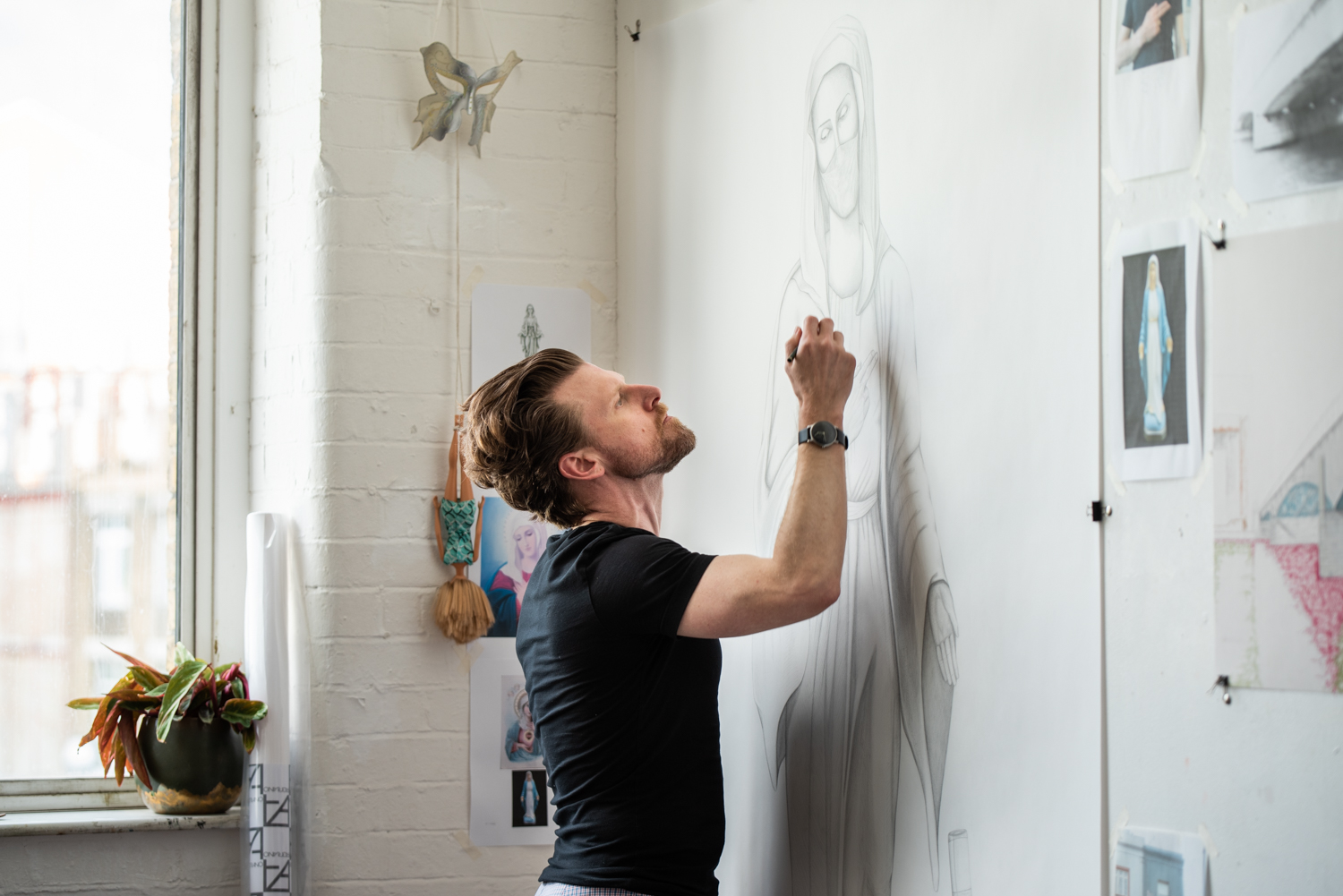
My performance and visual practices have always travelled as parallels – yet to converge. I am not sure why this is other than a lack of time and resources to explore how they might meet. That said, I think making paintings and the process of being an actor have similarities – they are both willing something into meaning. My art work has always been lightly allegorical and so I think story or the promise of a story unresolved drives me as an artist. The story is everything as an actor. Although opportunities to perform are often dictated by others (sometimes nefariously), my visual practice is a chance for me to claim back my own creativity. This is a privilege. Being a workshop leader is something that not only helps pay the bills but allows me to share ideas and skills as my former mentors and teachers did with me. It’s vital. I guess as I age, I become more vampire like too – I learn a lot and borrow from young people as they are so energised and curious. I love that. I also see a general decline in the quality of arts-based education (and a drive to commercialise everything), so teaching in a way similar to those amazing teachers I had, feels like my little way to contribute.
What are planning and working on for the future?
Painting, painting, painting. I need to build a new body of work but without wanting to moan, paying bills is hard. I also want to find ways to balance making stuff with meaning, and the sad and rapid decline of our beautiful planet. Making art demands focus and constant commitment so one must find ways to just keep going and developing. As a performer we will see – I guess there is always the promise that something can and will change on a moment’s notice. This can be stressful but genuinely hopeful!
Visit: Mackenzie S. Clowes @ 9 Queens
9 Queens Road, Brighton, BN1 3WA
No. 17 on the Central trail